
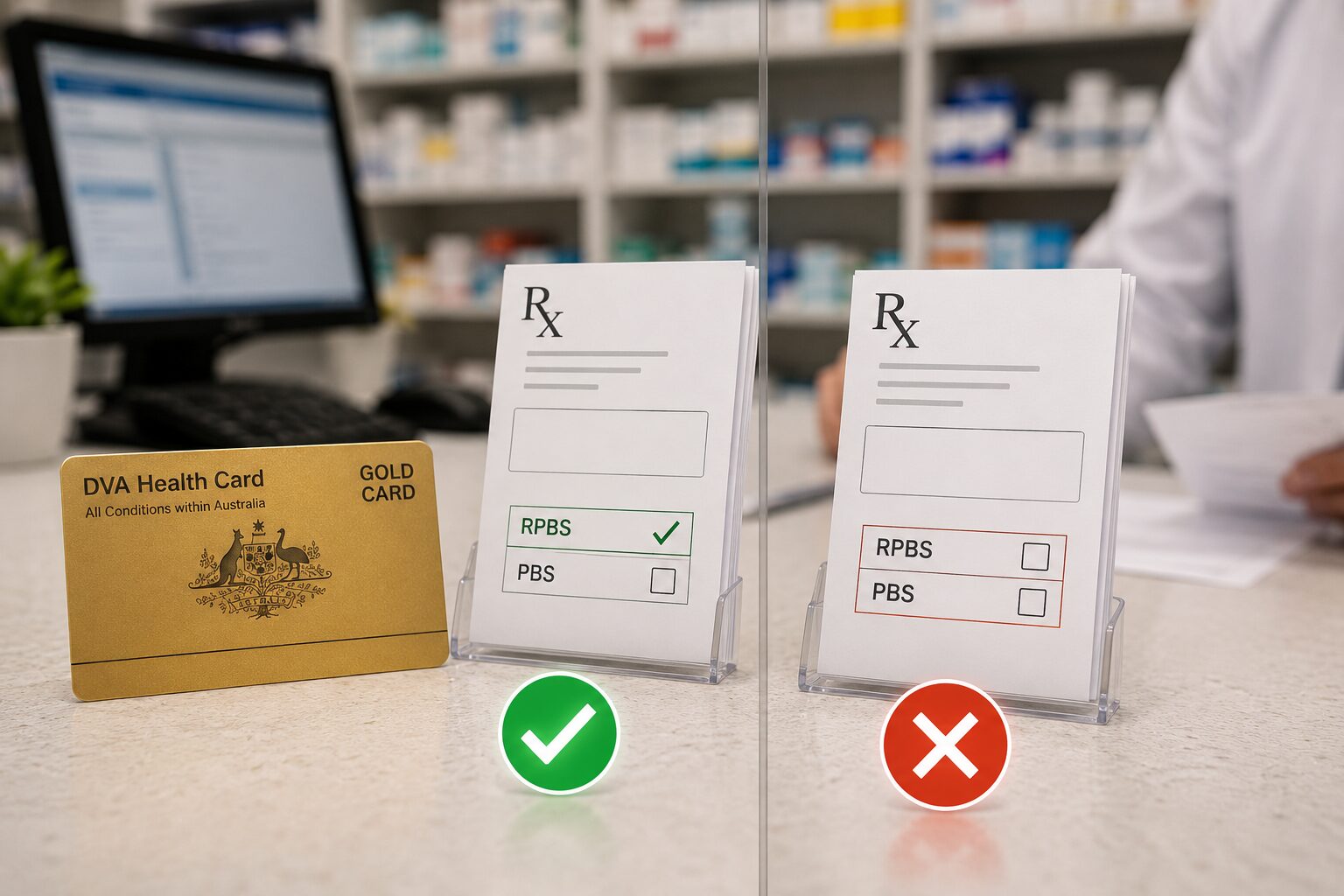
PBS/RPBS
Advanced
Just Because You Have a DVA Card…
A regular DVA patient disputed the pricing and eligibility of several medicines, believing they should all be supplied under the Repatriation Pharmaceutical Benefits Scheme (RPBS). The situation was complicated by a combination of paper prescriptions, electronic prescriptions, special-order medicines, app-related misunderstandings, and differing expectations regarding DVA entitlement.
The case highlighted the importance of understanding prescription requirements, communicating regulatory limitations, and maintaining professional boundaries when faced with repeated challenges.
Clinical Focus
Updated
Reading Time
01 Patient Presentation
A regular script-on-file patient holding a DVA card had multiple ongoing medicines managed through the pharmacy.
Several medicines had been ordered through the pharmacy application, including some items that required special ordering and one medicine that was unavailable from suppliers due to stock shortages.
When the patient attended the pharmacy to collect medicines, she disputed the pricing of several items and insisted they should be supplied under RPBS.
She stated that she had a DVA card and believed all associated prescriptions should automatically qualify for concessional pricing.
02 Assessment
A review of the prescriptions identified several issues.
For some paper prescriptions:
- Neither the PBS nor RPBS section had been appropriately completed.
- DVA eligibility details were absent.
- The prescriptions therefore did not meet RPBS requirements.
For electronic prescriptions:
- Some prescriptions clearly identified DVA eligibility.
- Others contained no DVA information.
As a result, certain medicines qualified for RPBS supply while others did not.
Additional concerns arose regarding:
- Special-order items that were not routinely stocked.
- Medicines unavailable from wholesalers.
- Patient expectations regarding pharmacy app functionality.
- Misunderstandings regarding how prescription records are shared between pharmacies.
The patient believed all Chemist Warehouse stores should have direct access to her records and was frustrated by the limitations of the ordering system.
03 Decision Made
Each prescription was assessed according to its individual legal and reimbursement requirements.
Medicines that met RPBS requirements were supplied accordingly.
Medicines that did not meet RPBS requirements were processed under the applicable pricing structure.
04 Action Taken
Significant time was spent explaining:
- The difference between DVA entitlement and RPBS eligibility.
- The requirements prescribers must meet when issuing RPBS prescriptions.
- Why pharmacists cannot retrospectively alter prescription eligibility.
- How the Chemist Warehouse ordering system operates.
- Alternative methods for managing electronic prescriptions while travelling.
Information was provided regarding SMS-based prescription management to improve future access to medicines.
05 Reflection
This case reinforced an important principle of pharmacy practice: pharmacists are responsible for assessing prescriptions based on what is written, not what was intended.
Many patients assume that possession of a DVA card automatically guarantees RPBS pricing for all medicines. In reality, eligibility depends on both patient entitlement and the way the prescription is issued.
The most challenging aspect of this case was not the legislation itself but managing expectations when the patient believed that other pharmacies routinely supplied the medicines differently.
The interaction also highlighted the importance of separating patient frustration from the underlying issue. While the patient directed her concerns toward pharmacy staff, the actual barriers related to prescription requirements and system limitations rather than pharmacy decisions.
Following the incident, the team discussed creating a simple laminated guide outlining RPBS prescription requirements. This would provide a visual reference during future consultations and help explain that these requirements are determined by legislation rather than individual pharmacy preference.
The experience reinforced the importance of remaining calm, consistent, and evidence-based, even when conversations become repetitive or confrontational.
Case Summary
A regular DVA patient disputed the pricing and eligibility of several medicines, believing they should all be supplied under the Repatriation Pharmaceutical Benefits Scheme (RPBS). The situation was complicated by a combination of paper prescriptions, electronic prescriptions, special-order medicines, app-related misunderstandings, and differing expectations regarding DVA entitlement.
The case highlighted the importance of understanding prescription requirements, communicating regulatory limitations, and maintaining professional boundaries when faced with repeated challenges.
Alternative Approach
Alternative actions could have included:
- Contacting the prescriber to request corrected prescriptions.
- Providing written information regarding RPBS requirements during the consultation.
- Escalating the discussion to pharmacy management earlier in the interaction.
However, none of these approaches would have altered the legal requirements governing prescription processing.
Key Learning
A patient’s entitlement does not automatically make every prescription RPBS eligible. Pharmacists must assess each prescription individually and follow legislative requirements even when patients insist that other pharmacies do things differently.